
Grand Uzbekistan Tour – In the Footsteps of Alexander the Great
Grand Uzbekistan Tour – In the Footsteps of Alexander the Great: An Epic Journey of Discovery Through Ancient Oases, Macedonian Myths, and the Eternity of the Silk Road
When the heavy, intricately carved wooden gates of a centuries-old caravanserai at the edge of the desert open and the subtle, enchanting scent of freshly roasted cumin, sun-ripened honey melons, and dry desert wind drifts through the winding, clay-colored alleys, you are not simply entering another arbitrary travel destination. You are stepping into a living, breathtaking history book whose pages are woven from shimmering lapis lazuli, ochre-colored clay, gleaming gold, and millennia-old poetry. Historical Uzbekistan forms the undisputed geographical, economic, and cultural heartbeat of Central Asia—a magical place of longing where the martial and statesmannlike echoes of Alexander the Great, Hellenistic strategists, Genghis Khan, Marco Polo, and Tamerlane still resonate powerfully within monumental domes, minaret-crowned skylines, and formidable fortress walls. As your specialized local expert team on the ground, we invite you on a profound, transformative journey of discovery that goes far beyond conventional, superficial sightseeing. This carefully curated Grand Tour leads you in the footsteps of the Macedonian world conqueror deep into the heart of the legendary oasis cities of Samarkand, Bukhara, Khiva, and all the way to the remote regions of Bactria and Sogdiana—where the Silk Road once connected continents, ancient kingdoms rose and fell, and warm hospitality has been cultivated as a sacred tradition for generations.
Day by Day Itinerary
- 1
Arrival in Tashkent and transfer to the hotel. Overnight stay in a 3-star hotel. Meals: -/-/-
- 2
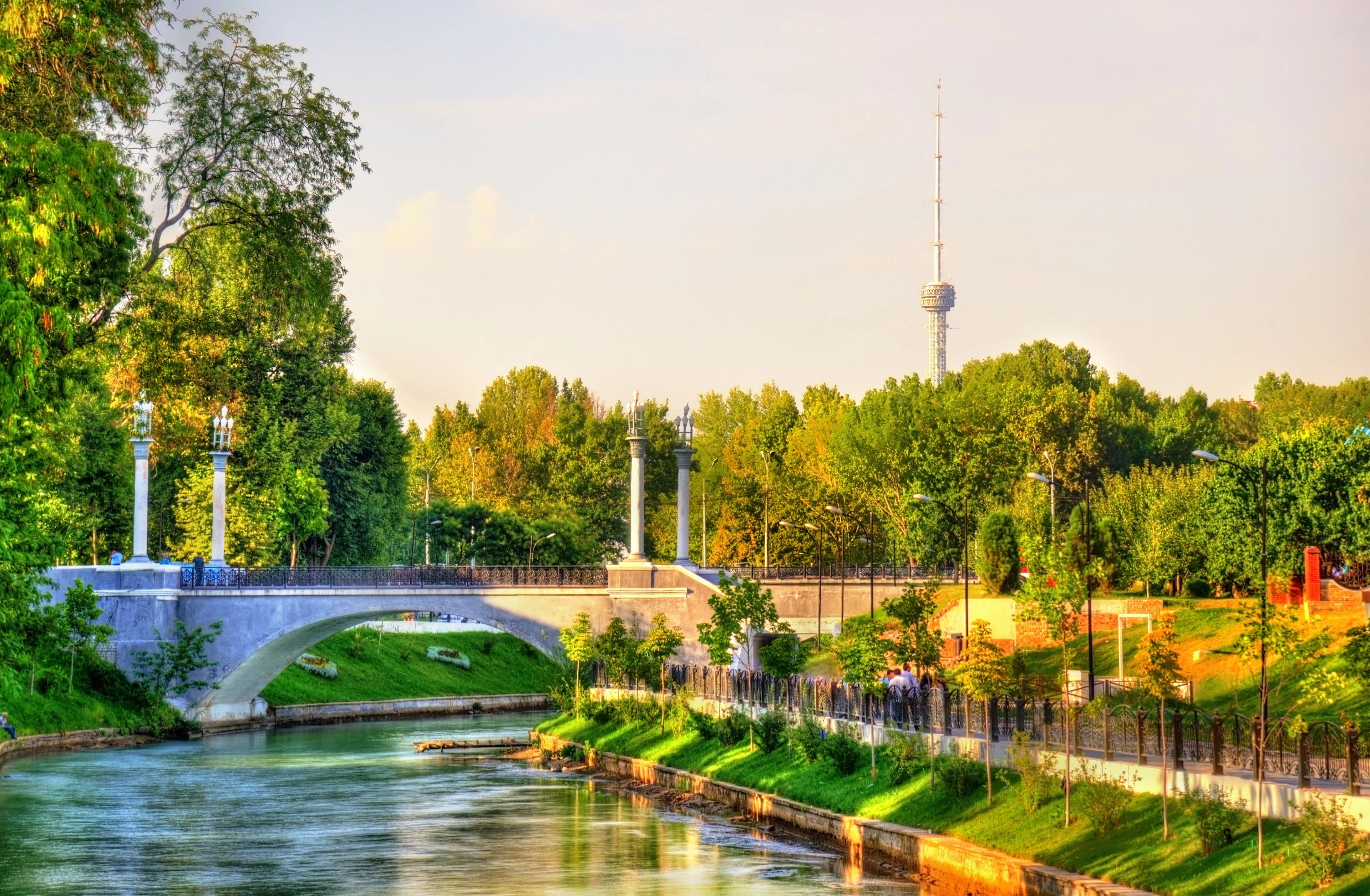
Following breakfast, we embark on a city tour of Tashkent. Tashkent, the capital of the Republic of Uzbekistan, is situated in the northeastern part of the country and, with over two million residents, is the largest metropolis in Central Asia. Alongside its historical landmarks, the city offers a distinctly contemporary side, featuring modern hotels, restaurants, theaters, cinemas, opera houses, and oriental bazaars while preserving a millennium of history. During our city tour, we visit the Barak Khan Madrasah (an architectural complex dating from the 15th to 17th century), the Kaffal-Shashi Mausoleum (built in the 16th century and remodeled in the 19th), and the Khoja Ahrar Wali Mosque (1404–1490; Khoja Ahrar was a prominent sheikh of the Naqshbandi order). Afterward, we visit the Kukeldash Madrasah (16th century) and the traditional Chorsu Bazaar. Dinner at a local restaurant. Overnight stay in a 3-star hotel. Meals: F/-/A
- 3
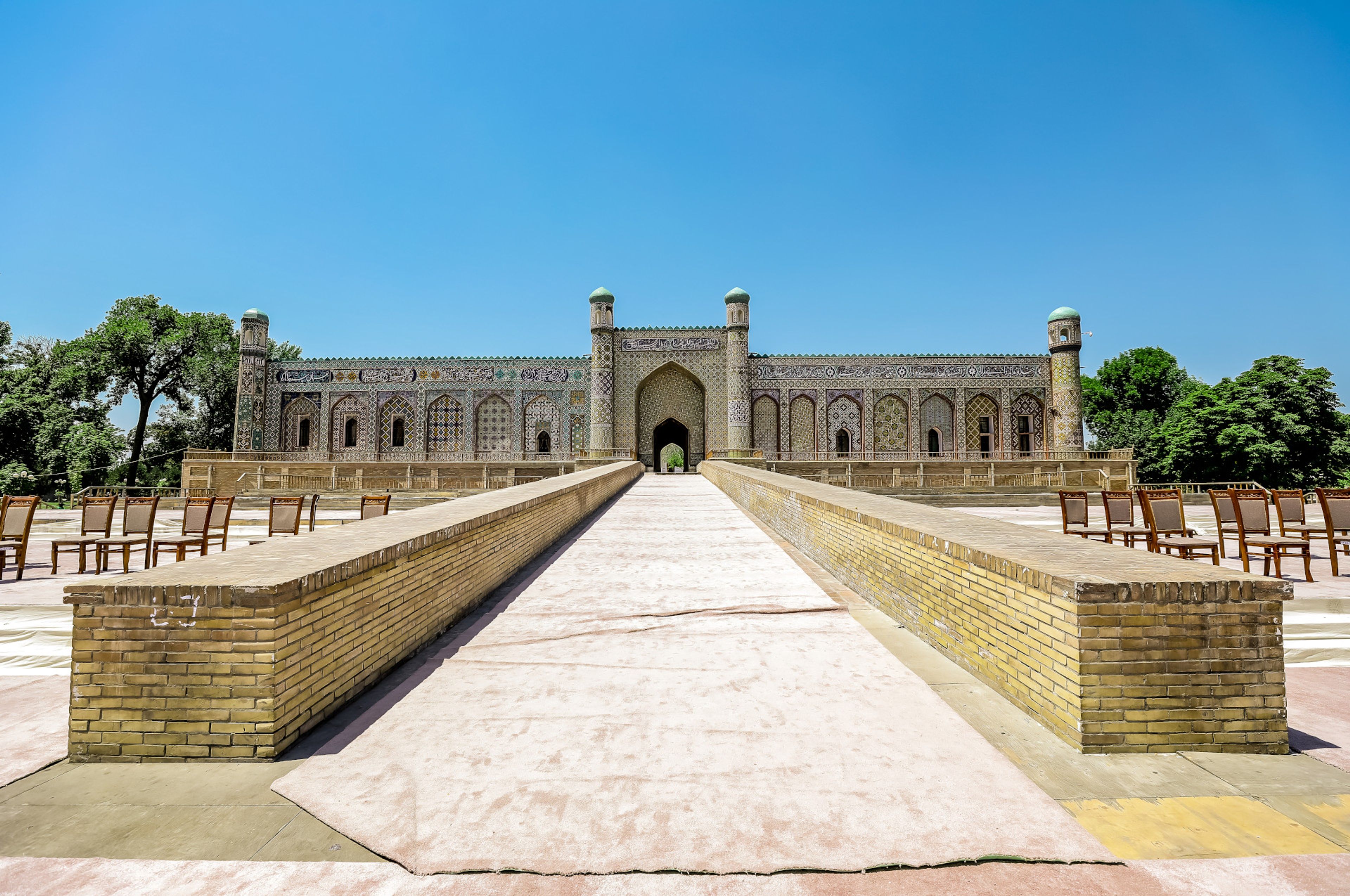
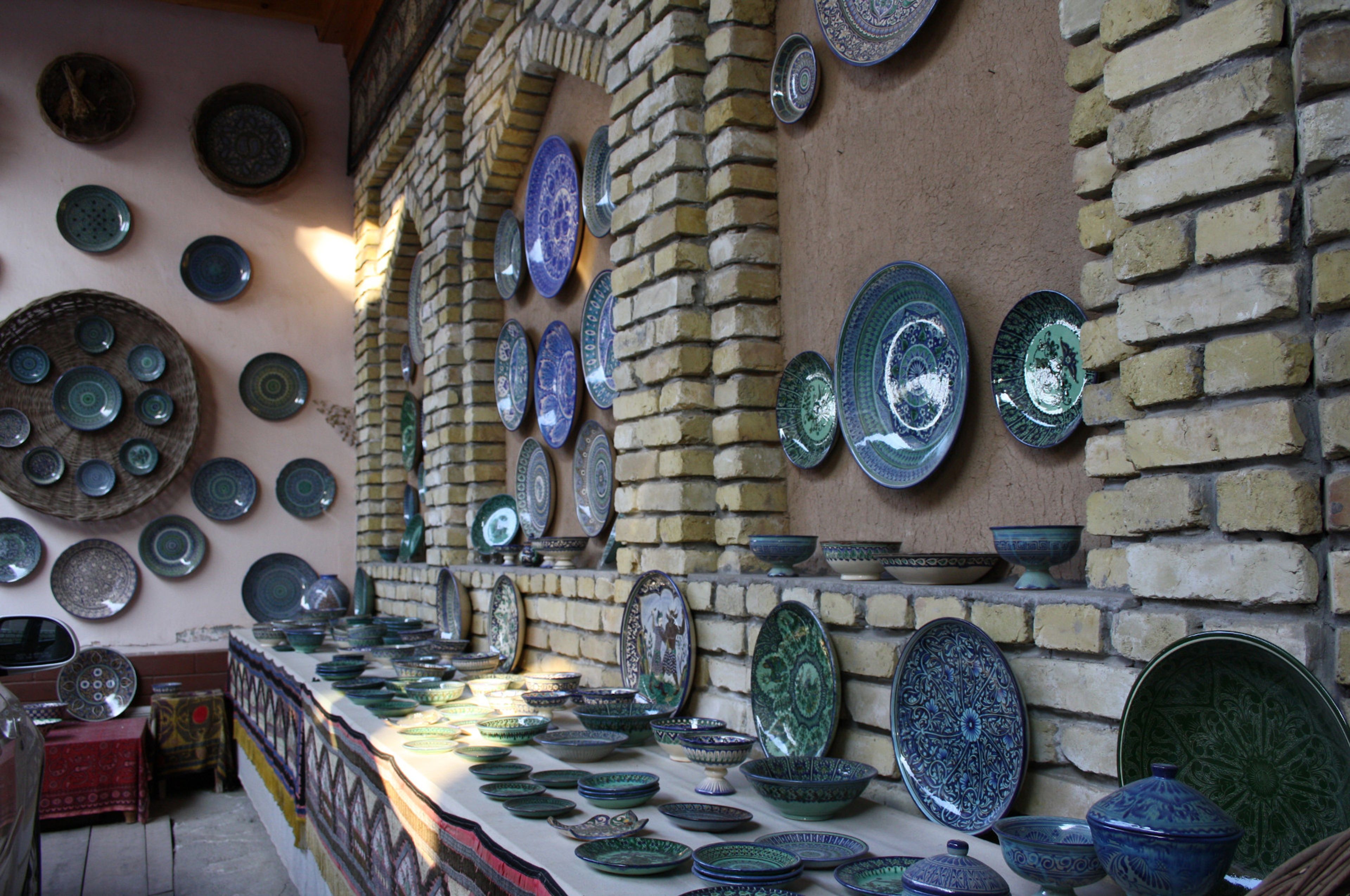
After breakfast at the hotel, we drive into the picturesque Fergana Valley, one of Uzbekistan's most scenic regions. Our route takes us across the impressive Kamchik Pass. In Kokand, a visit awaits us at the magnificent Palace of Khudayar Khan, constructed between 1833 and 1873. Its colorful, roughly seventy-meter-wide facade is a masterpiece of traditional folk art and reflects the region's long-standing pottery-making heritage. We also visit the impressive Juma Mosque (1809–1812), the Amin-Beg Madrasah, and the Dakhma-i-Shokhon Necropolis. Our journey then continues to Rishtan, the center of Uzbek ceramic artistry. Here, we visit a family-run workshop where ceramics have been crafted using traditional methods for over 800 years. In the evening, we drive to Margilan, where we check into a comfortable 3-star hotel for the night. Meals: F/-/A
- 4
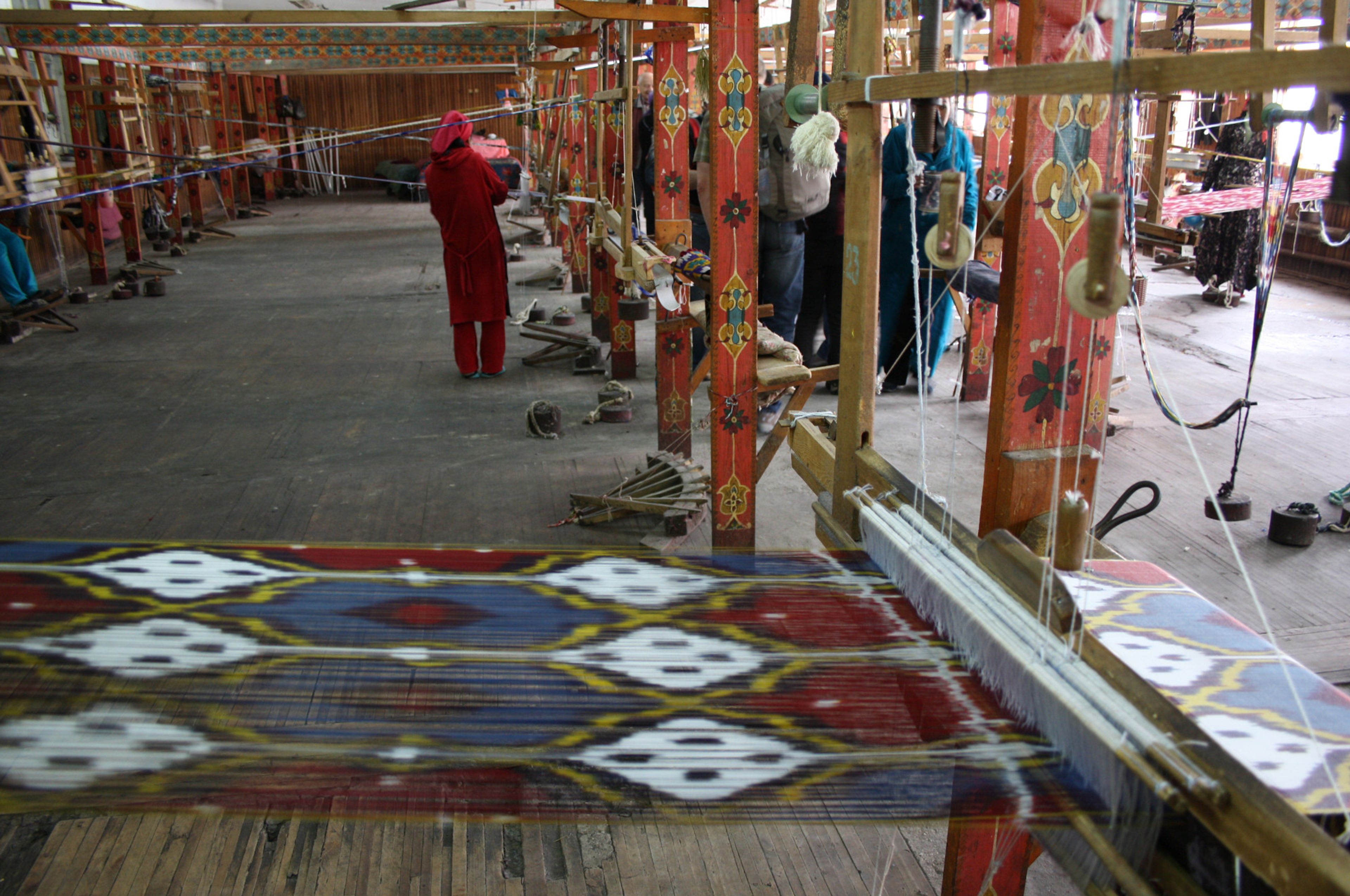
Following breakfast at the hotel, we visit Margilan, one of Uzbekistan's oldest cities and historically a vital hub along the Silk Road. Here, we tour the traditional Yodgorlik Silk Factory, renowned for centuries for its high-quality handmade silk products. In the afternoon, we proceed to Fergana for a brief city tour before returning to Tashkent via the scenic Kamchik Pass. Overnight stay in a comfortable 3-star hotel in Tashkent. Meals: F/M/-
- 5
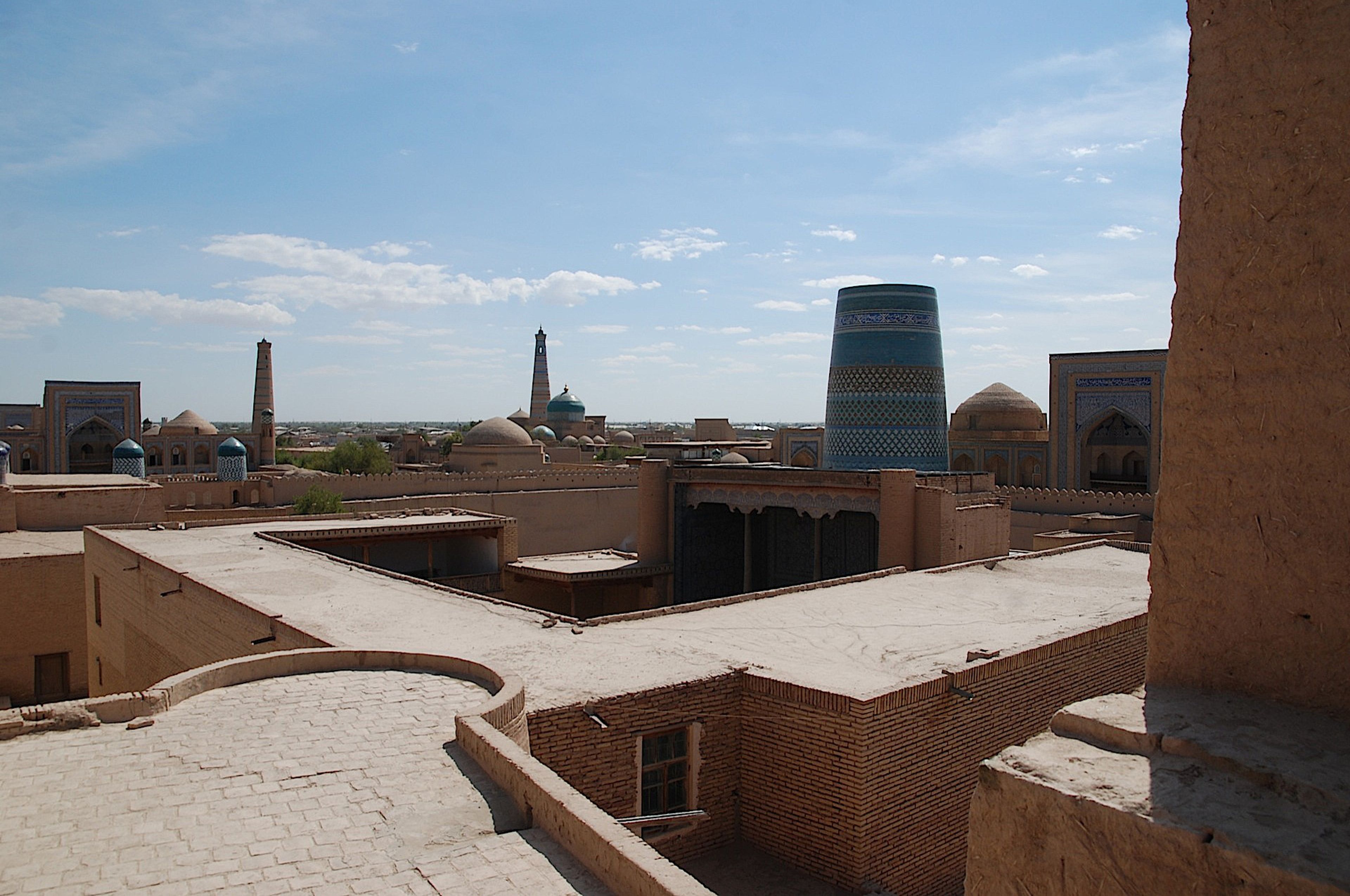
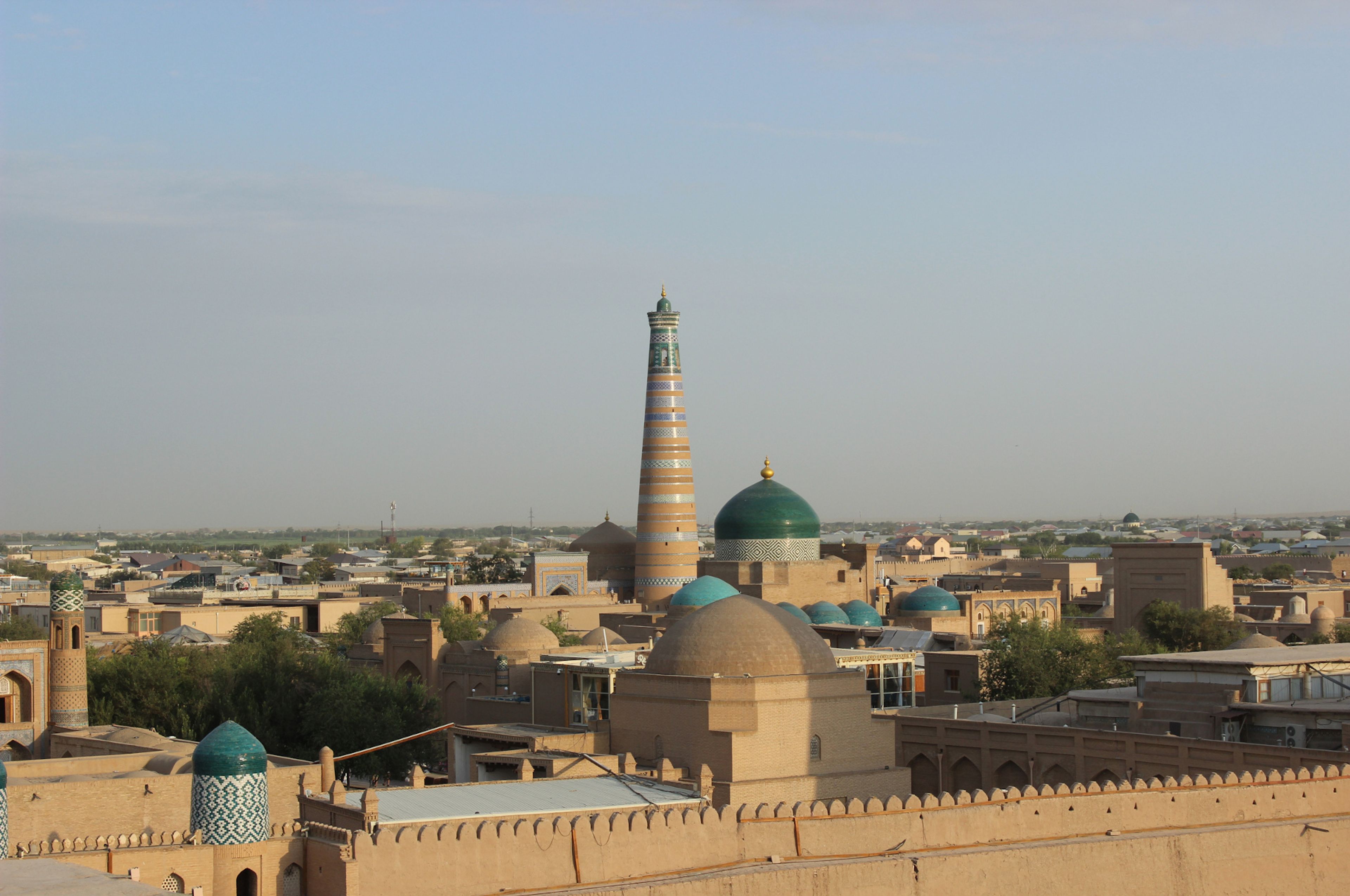
Early morning transfer to the airport and flight to Urgench. Upon arrival in Urgench, we continue by road to Khiva (35 km). In Khiva, we explore the historic inner town of Itchan Kala, which has been protected by UNESCO since 1990 as a World Heritage site. Dinner at a local restaurant. Overnight stay in a 3-star hotel. Meals: F/-/A
- 6
After breakfast, we continue our exploration of the historic inner town of Itchan Kala, protected by UNESCO since 1990 as a World Heritage site. Dinner at a local restaurant. Meals: F/-/A
- 7
After breakfast, drive: Bukhara → Khiva (480 km). Traveling through the Kyzylkum Desert (Red Sand), you will experience the singular vastness of Central Asia's desert landscape. Covering approximately 200,000 km², the Kyzylkum Desert spans parts of Turkmenistan, Uzbekistan, and Kazakhstan, and derives its name from the reddish sand found throughout the region. Khiva, with a population of about 60,000, lies in northwestern Uzbekistan, west of the Amu Darya along the ancient Silk Road. Dinner at a local restaurant. Overnight stay in a 3-star hotel. Meals: F/-/A
- 8
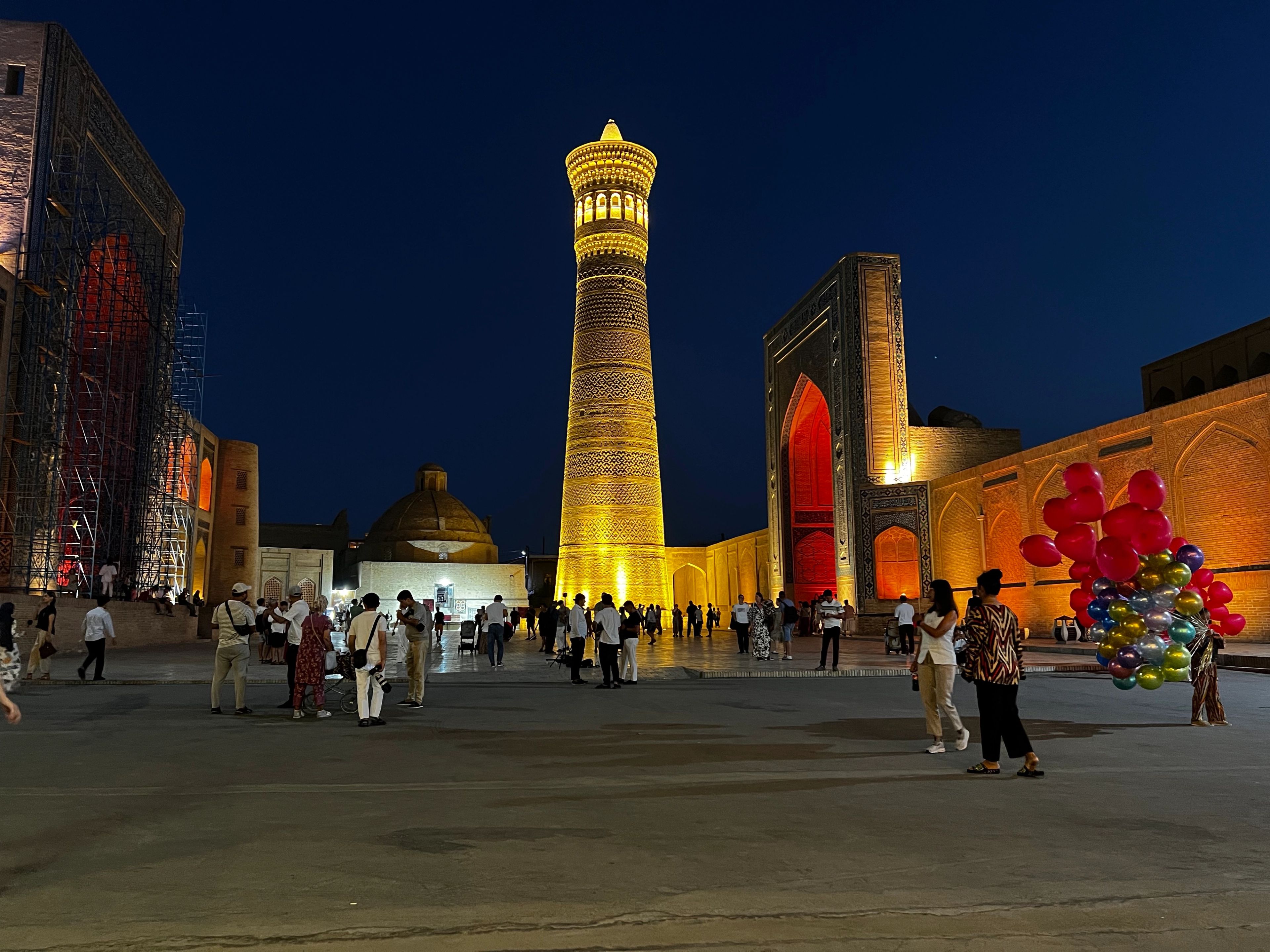
Following breakfast, we drive to Bukhara. Upon arrival, we begin our exploration of the city, which is the birthplace of numerous world-famous scholars such as Avicenna (Ibn Sina), Al-Bukhari, and many others. Bukhara, with a population of 235,517 (as of January 1, 2008), has been designated a UNESCO World Heritage site since 1993. We visit the legendary Po-i-Kalyan Minaret and the Po-i-Kalyan Complex (12th century), along with three remarkable domed bazaars: Toqi Sarrofon (Exchange Bazaar, 16th century), Toqi Telpak Furushon (Cap Makers' Bazaar, 16th century), and Toqi Zargaron (Jewelers' Bazaar, 16th century). We then visit the Labi-Hauz Complex (16th–17th century) and the Nadir Divan-begi Madrasah (1630). Dinner at a local restaurant. Overnight stay in a 3-star hotel. Meals: F/-/A
- 9
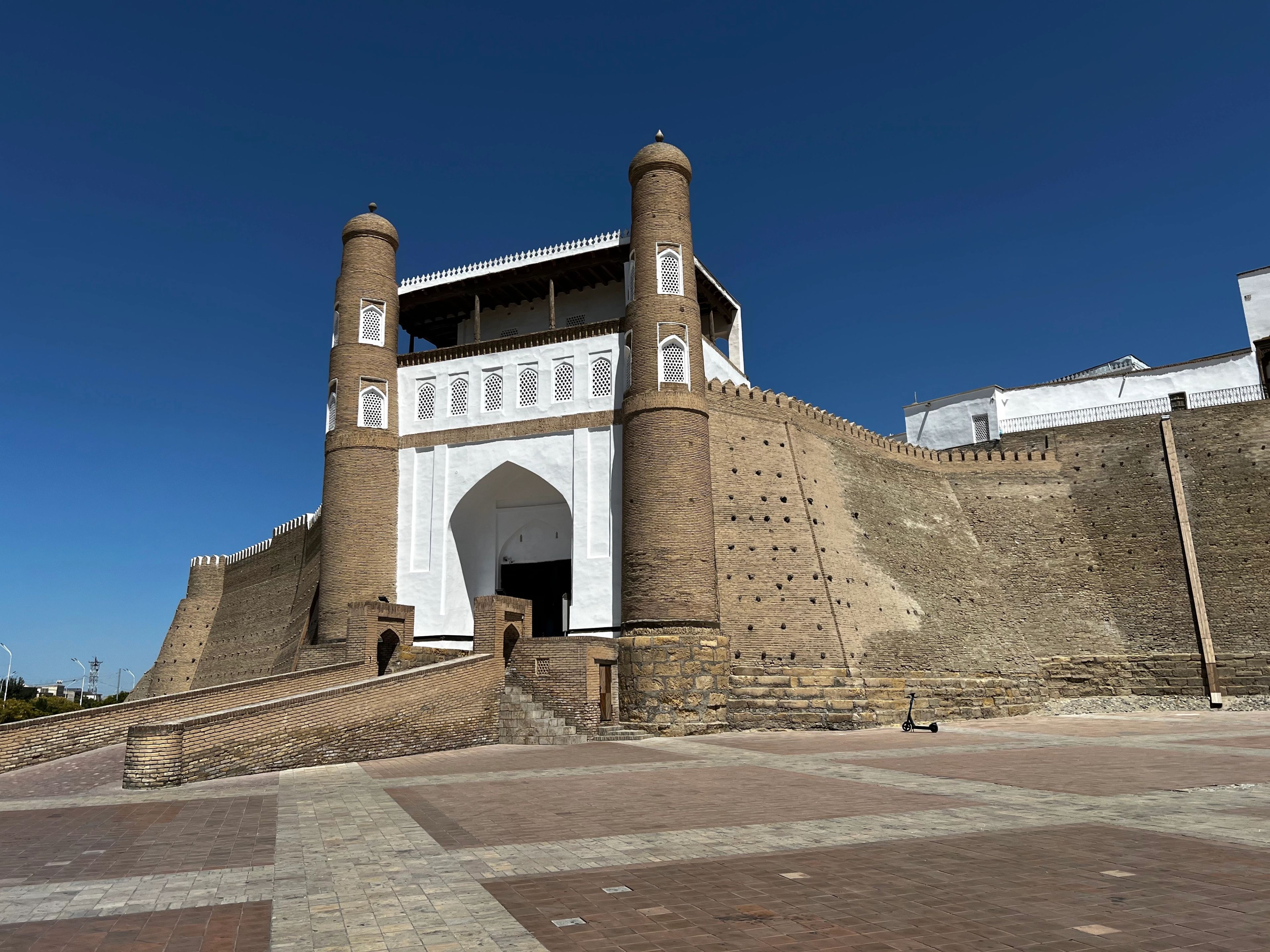
After breakfast, we tour the Ark of Bukhara (the former fortress-residence of the Emir of Bukhara), which recent excavations confirm has stood on this site since the 4th century BC. We also visit the Zindan (the Emir's prison), the Chashma-Ayub Mausoleum, the Bolo Hauz Mosque (Friday mosque, built in 1712), the Abdullakhan Madrasah, the Modarakhan Madrasah, and the Khoja Zaynuddin Complex. With the Samanid Mausoleum (9th century), we encounter the oldest surviving monument of Islamic architecture in Central Asia and the sole architectural relic of the Samanid dynasty. In the afternoon, we visit the Sitorai Mokhi-Khosa Palace (the summer palace of the last Emir of Bukhara, 19th century) and the mausoleum of Baha-ud-Din Naqshband (14th century), founder of the Naqshbandi Sufi order and one of the most significant pilgrimage sites for Muslims. Afterward, we visit the Chor Bakr Necropolis (often called the 'City of the Dead', 16th century) and the Chor Minor Madrasah (18th century). Dinner at a local restaurant. Overnight stay in a 3-star hotel. Meals: F/-/A
- 10
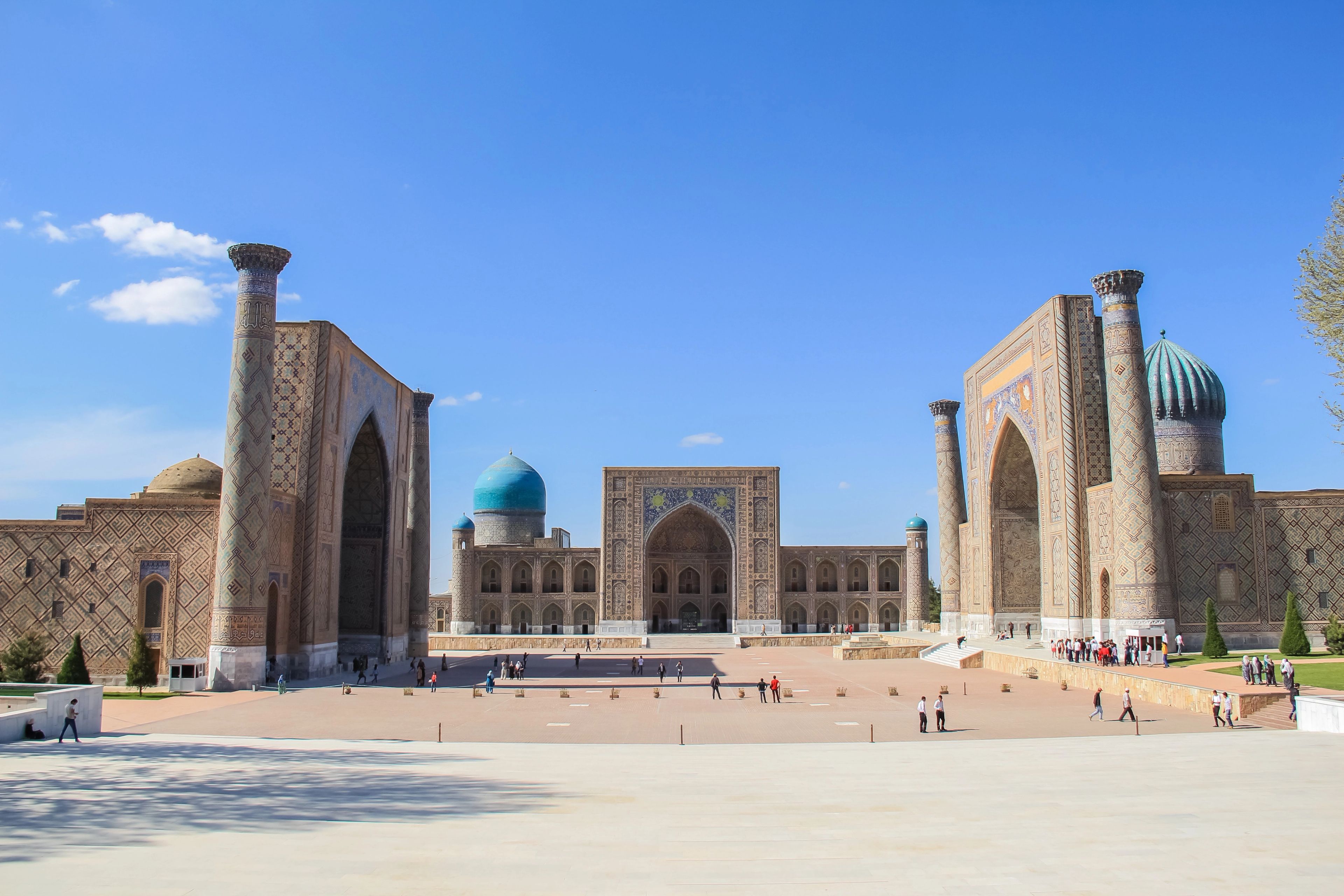
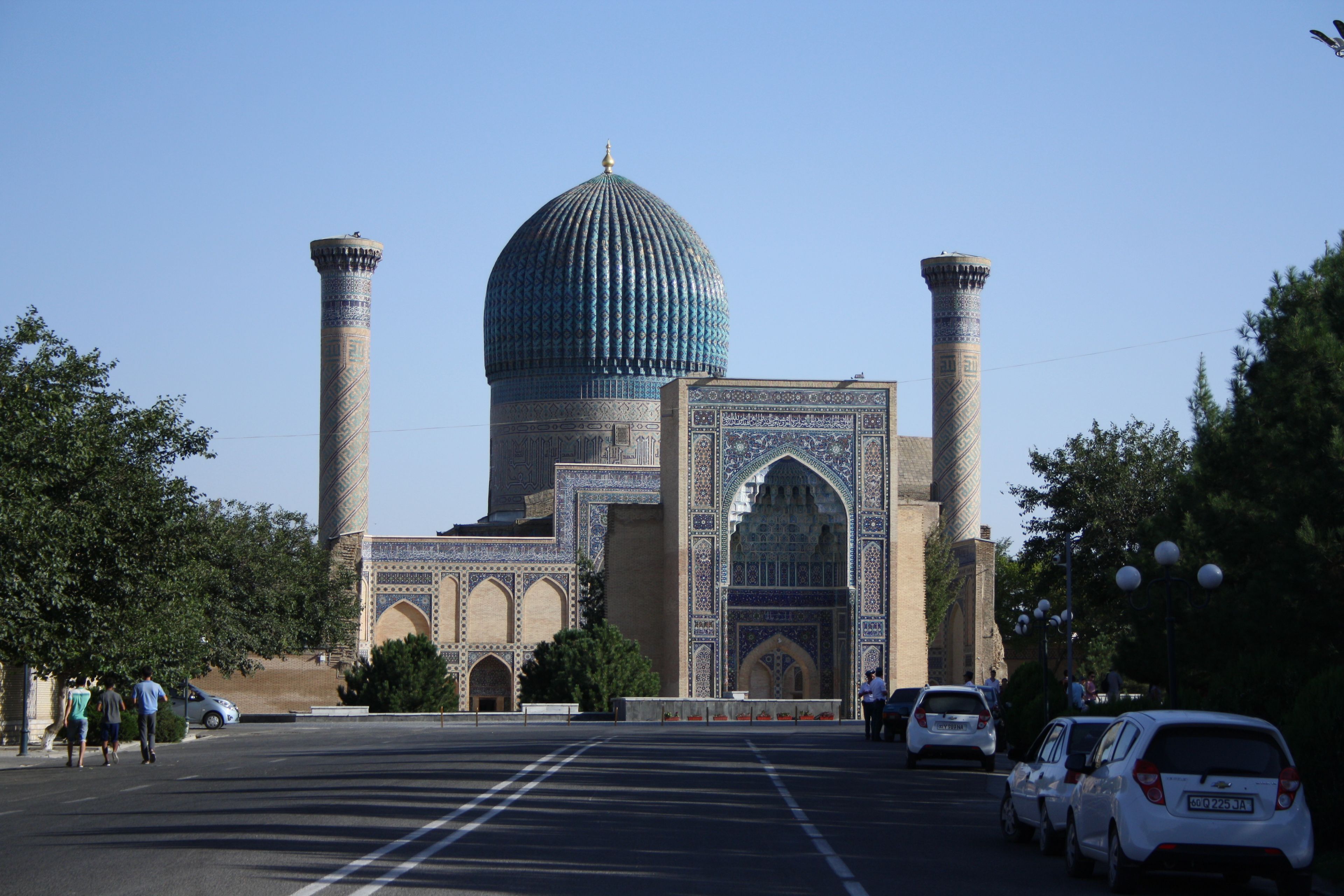
After breakfast, we drive to Samarkand. Samarkand (population 353,347 as of January 1, 2008) is also a UNESCO World Heritage site. The city's history spans more than 2,500 years. Visitors are consistently captivated by the remnants of the legendary Afrasiyab settlement, the capital of the ancient realm of Sogdiana (9th century BC), located in the northern part of modern Samarkand. It is not without reason that Samarkand is often called the jewel of the earth. Our exploration of Samarkand begins at the renowned Registan Square, construction on which began during the Timurid era and continued over the following three centuries. We visit the three madrasas of the Registan: the Ulugbek Madrasah (built 1417–1420), the Sher-Dor Madrasah (1619–1636), and the Tillo-Kori Madrasah (1646–1660). For lunch, you will be served traditional Uzbek plov (prepared strictly as halal). Alternative options can be ordered upon request (though we strongly recommend trying traditional Samarkand plov at least once, as it is prepared exclusively for lunch). In the afternoon, we visit the legendary Timurid mausoleum Gur-e-Amir (14th–15th century). Dinner with an Uzbek family. Overnight stay in a 3-star hotel. Meals: F/-/A
- 11
Following breakfast, we visit the Bibi-Khanym Mosque and Madrasah (14th century) and learn about the legends surrounding its construction. We then visit the traditional oriental Siyab Bazaar. Near the bazaar lies the Shah-i-Zinda ensemble ('the living king', 9th–14th century), one of the world's most renowned collections of mausoleums, whose exquisite architecture enchants every visitor. Afterward, we visit the famous Ulugbek Observatory, built in 1428–1429 on one of the hills of the Chupanata ridge, which was a remarkable and unique structure of its time. Dinner with an Uzbek family. Overnight stay in a 3-star hotel. Meals: F/-/A
- 12
After breakfast, you have free time at your leisure. Overnight stay in a 3-star hotel. Meals: F/-/-
- 13
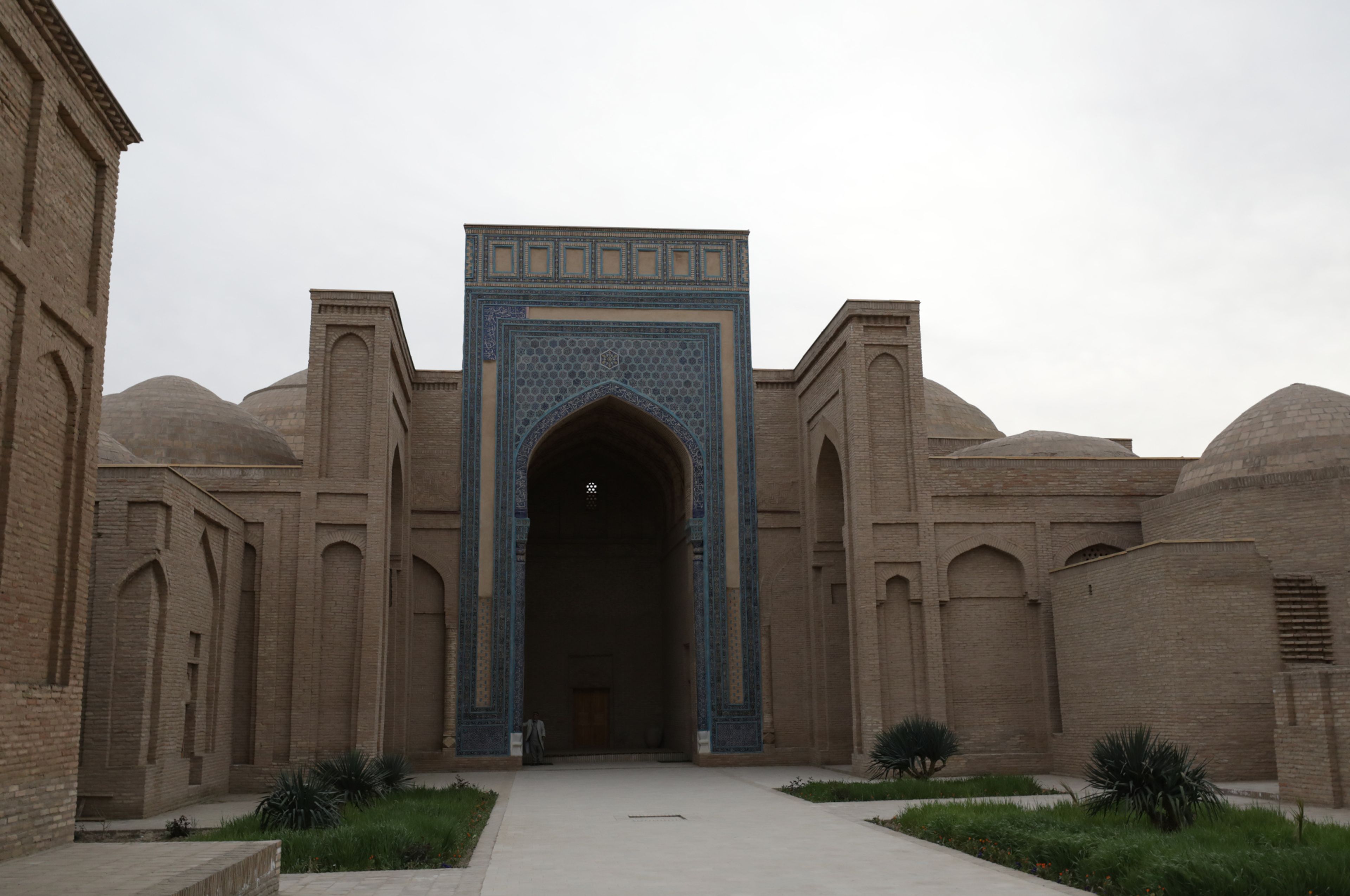
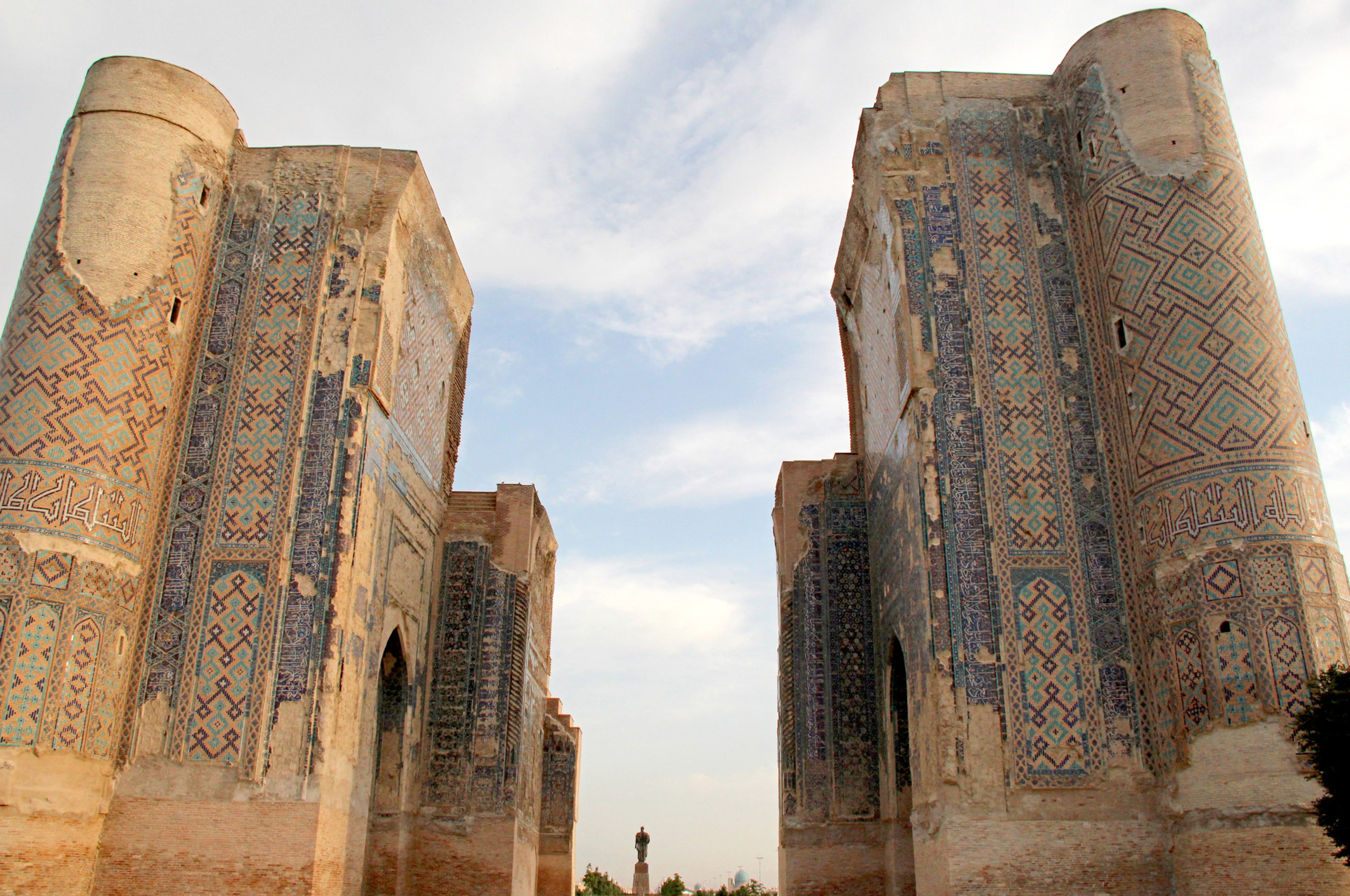
Following breakfast, we drive to Shahrisabz (330 km), the birthplace of Amir Temur (known in the West as Tamerlane). The city was already known to Alexander the Great as Nautaca. Under Amir Temur in the 14th century, the city—then known as Kesh—achieved global renown and was renamed Shahrisabz. Here, we visit the ruler's summer residence, the Ak Saray Palace (White Palace, 1380–1405). Its 65-meter-high ruins provide a sense of the scale and grandeur of the original structure. Ak Saray has been inscribed on the UNESCO World Heritage list. In addition, we visit the Kok Gumbaz Mosque, the Darus Saodat Complex, and the Jahongir Mausoleum. In the afternoon, we drive back to Termez. Dinner at a local restaurant in Termez. Overnight stay in a 3-star hotel. Meals: F/-/A
- 14
After breakfast, we set out to explore the city of Termiz. Situated on the banks of the Amu Darya River, which separates Uzbekistan from Afghanistan, Termiz was founded more than 2,500 years ago and ranks among the oldest cities in the world. Under the rule of the Kushan Empire (1st–2nd century AD), the city became a center of Buddhist culture, traces of which can still be seen today at sites such as the Zurmala Tower and the Kara-Tepe Monastery. The Sultan Saodat Complex, comprising several mausoleums, was built between the 12th and 17th centuries. We also visit the Hakim at-Termizi Complex (at-Tirmizi is considered one of the preeminent figures of Central Asian Sufism and the author of some eighty works; in recognition of his profound knowledge and broad intellect, he was bestowed the honorary title Al-Hakim, meaning 'the Wise'). Furthermore, we visit the Kirk-Kiz Palace and the Archaeological Museum. Dinner at a local restaurant. Transfer to the airport for the flight to Tashkent. Overnight stay in a 3-star hotel. Meals: F/-/A
- 15
✓ Inclusions
- ✓ 14 nights in 3-star hotels in double rooms with shower/WC
- ✓ 14x breakfast, 1x lunch, 11x dinner
- ✓ Mineral water (1.5 liters per person per day)
- ✓ All transfers according to the itinerary (primarily in air-conditioned vehicles)
- ✓ Flight ticket: Tashkent → Urgench
- ✓ Flight ticket: Termez → Tashkent
- ✓ All admission fees for sights mentioned in the itinerary
- ✓ German-speaking tour guide throughout the entire journey
- ✗ Personal expenses and special services at the hotel
- ✗ International flights
- ✗ Travel insurance of any kind
- ✗ Meals and beverages not mentioned in the itinerary
Interactive Map
? FAQ
Do I need a visa for Uzbekistan?▼
What payment methods are best accepted locally?▼
What is Uzbek cuisine like and can I drink tap water?▼
How do I best stay online and reachable in Uzbekistan?▼
What clothing is appropriate for the trip?▼
What type of electrical sockets are used in Uzbekistan?▼
How safe is traveling in Uzbekistan?▼
Is photography of people and sights allowed?▼
What tips are customary in Uzbekistan?▼
What languages are spoken locally?▼
🧳 Travel Essentials
Everything for your perfect Central Asia trip
* Affiliate links – we earn a small commission at no extra cost to you.